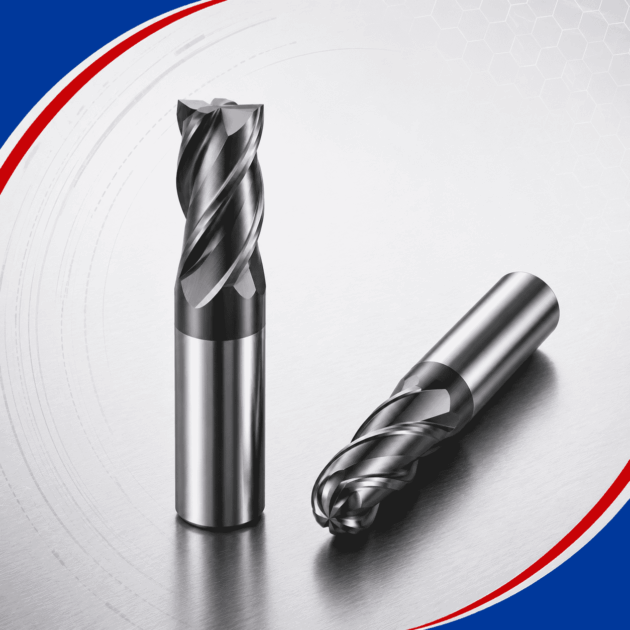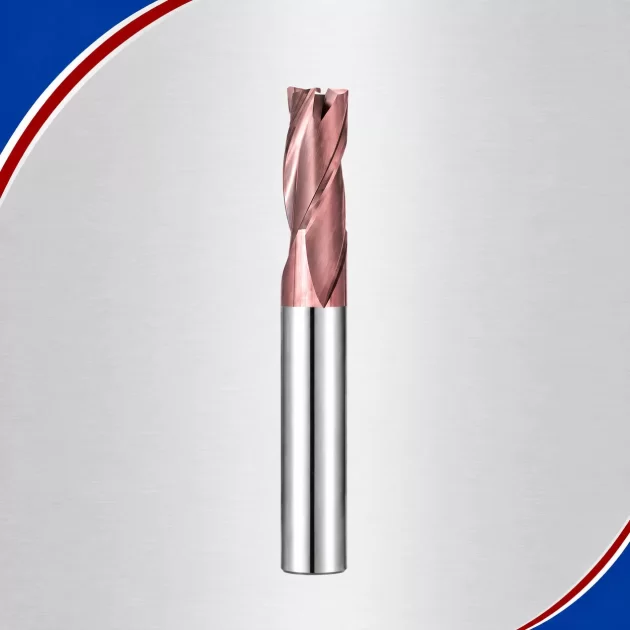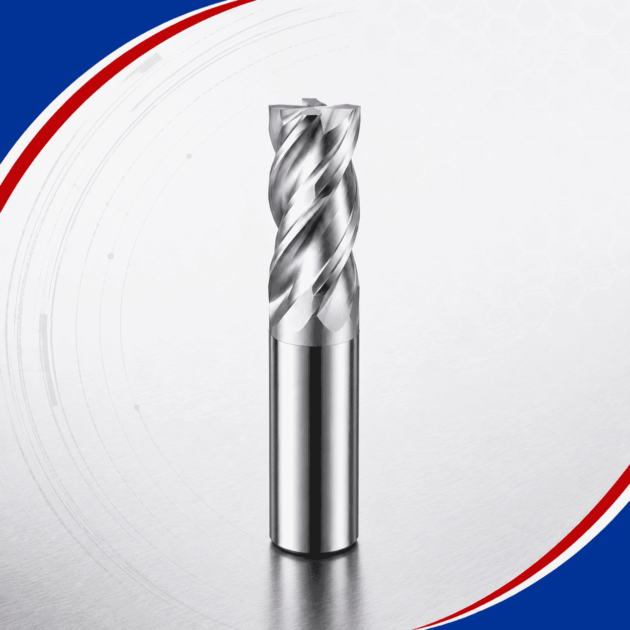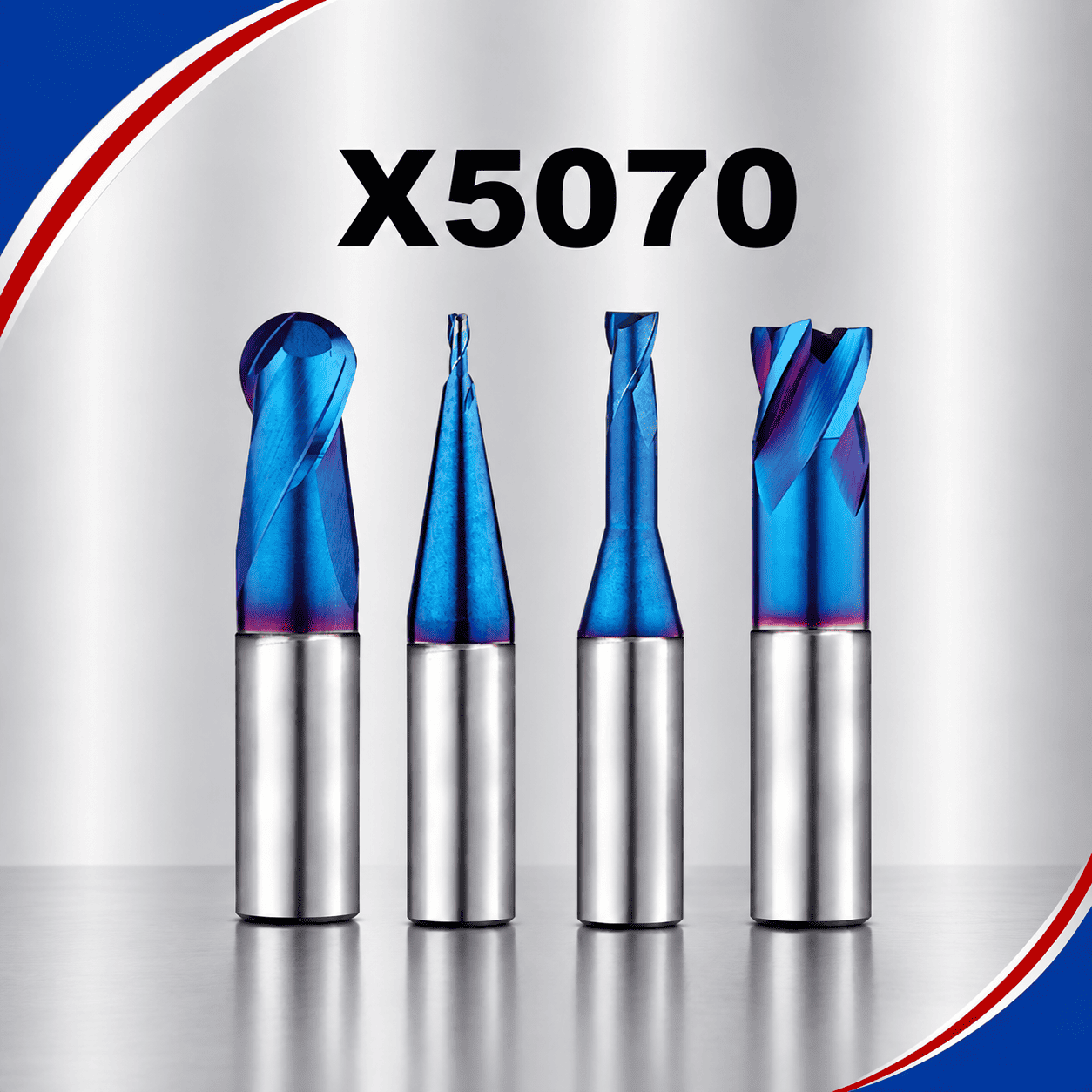
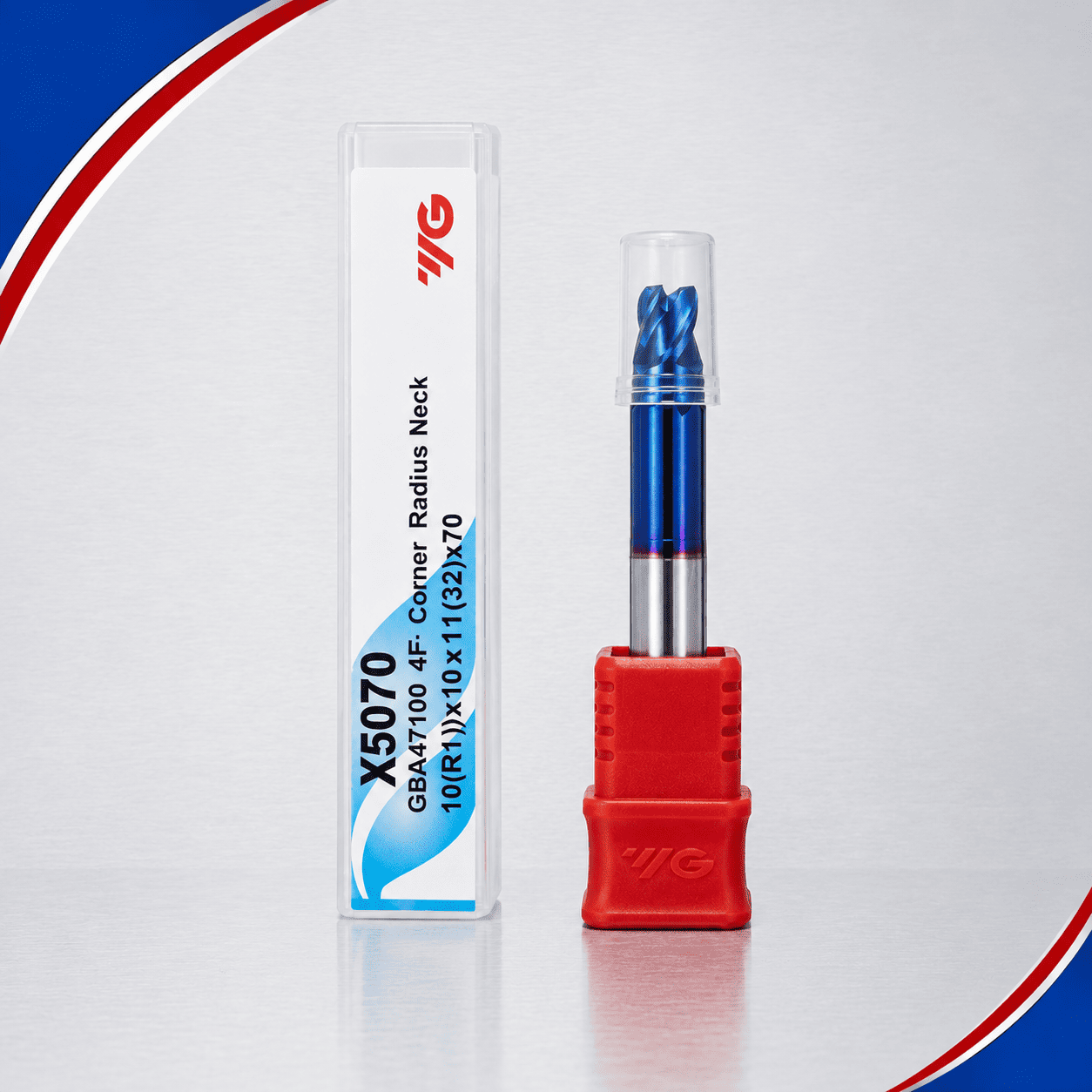
Description
Why Hardened Steel Needs a Dedicated Series
Above about 50 HRC the mechanics of cutting change. The material no longer forms a conventional chip, the temperature at the cutting edge rises steeply, and abrasive wear becomes the dominant failure mode rather than the gradual edge breakdown you see in soft steel. A general purpose cutter run in that environment does not wear slowly – it fails.
A nano grain carbide substrate gives a finer, harder, more wear resistant edge that holds up under that abrasion, and the coating carries the thermal load. Both are necessary. Neither one alone is enough.
Choosing the Flute Count
- 2 flute – maximum chip room. For slotting and deeper engagement where chips have to clear.
- 4 flute – the general choice for hardened steel milling at moderate radial engagement.
- 6 flute – finishing only, at light radial depth. There is almost no gullet space, so it will only work with a small stepover, but the extra edges give a superb finish.
Specifications of YG X5070 end mill
| Attribute | Value |
|---|---|
| Series | YG X5070 |
| Material | Nano grain solid carbide |
| Coating | Blue coating for hardened steel machining |
| Hardness range | 50 to 70 HRC |
| Flute counts | 2, 4 and 6 flute |
| Helix angles | 0 to 45 degrees depending on type |
| Geometries | Stub, regular, corner radius and ball nose |
| Application | Die and mould, hardened tool steel, high hardness milling |