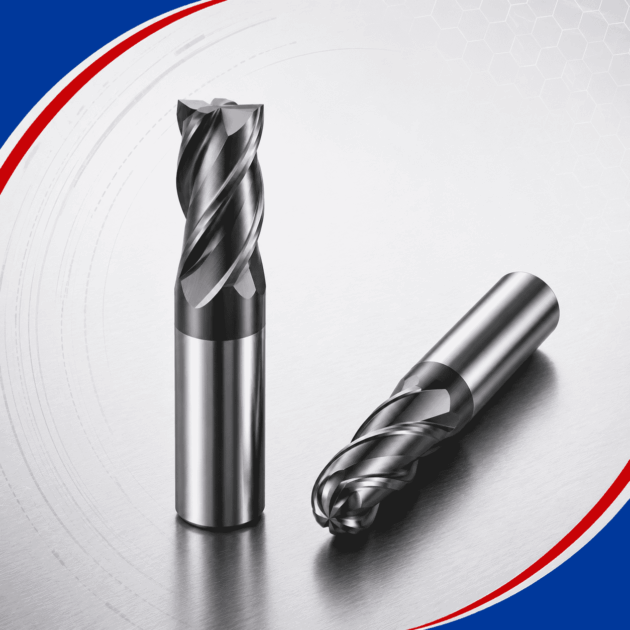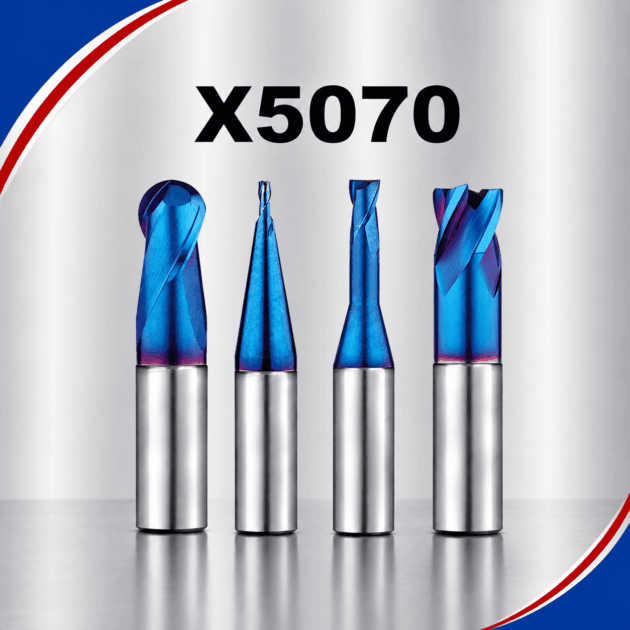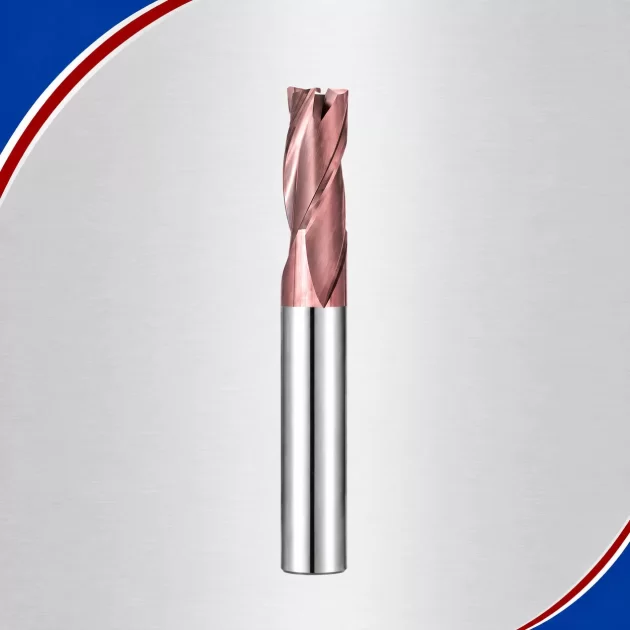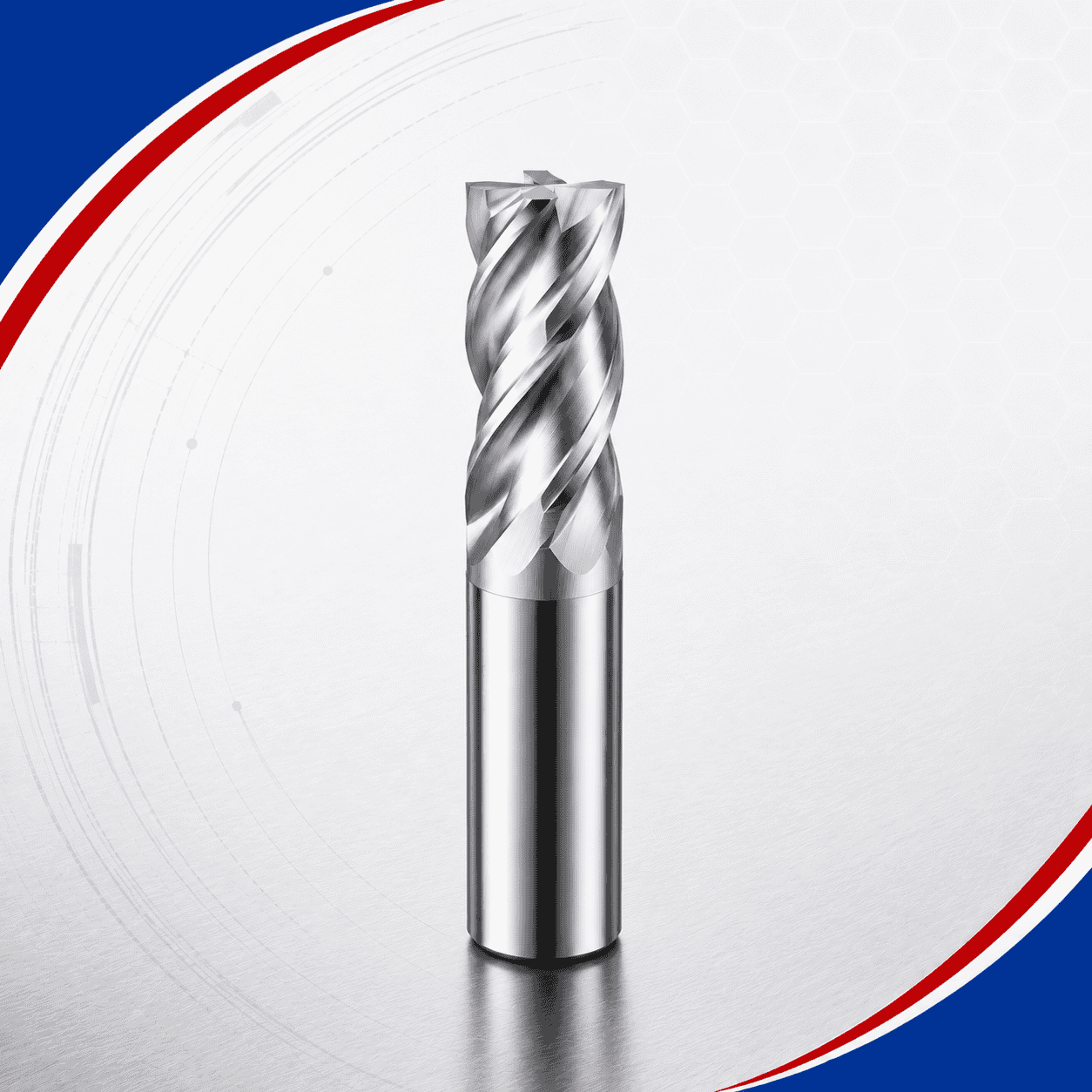
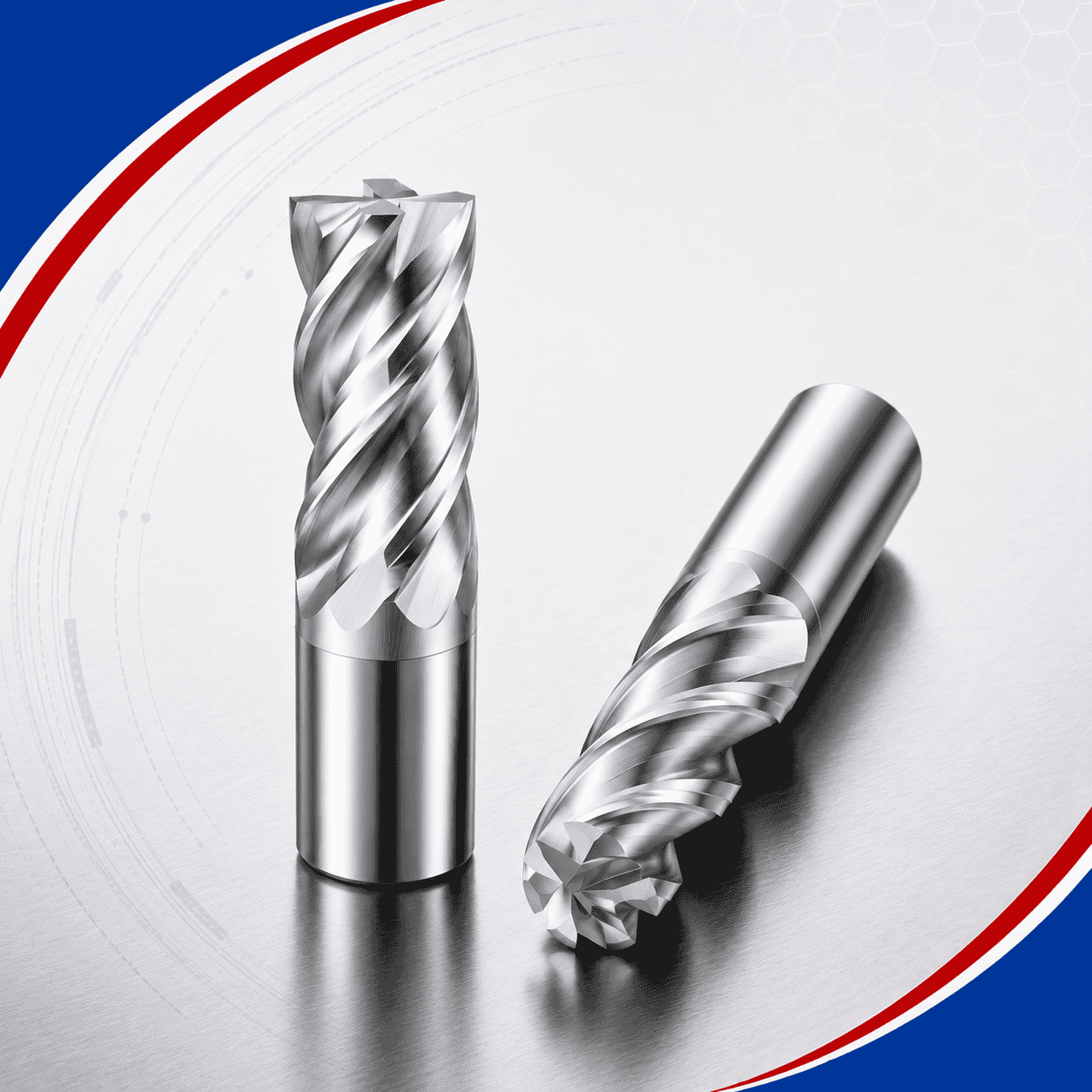
Description
Why Aluminium Needs Its Own End Mill
End mill for aluminium! Aluminium does not fail a cutter through wear. It fails it through adhesion. Aluminium is soft and it welds itself to the cutting edge, building up a lump of material that changes the geometry, tears the surface finish apart and eventually breaks the flute. Every other consideration in aluminium milling is secondary to preventing that build-up.
Three things prevent it. A very sharp edge, so the material shears cleanly instead of being pushed. A polished flute, so the chip slides out instead of sticking. And a high helix with plenty of gullet space, so the chip leaves the cut immediately. ALU-POWER is built around all three.
This is why a steel end mill fails in aluminium so quickly. A steel geometry has a stronger, blunter edge and an unpolished flute – both of which are correct for steel and completely wrong for aluminium. It will build up on the edge within seconds.
Flute Count for Aluminium
- 2 flute – maximum chip room. The traditional choice for slotting and deep pockets in aluminium.
- 3 flute – the modern high feed choice. Better rigidity than 2 flutes while keeping enough gullet space for the chip volume. For most CNC aluminium work this is now the default.
- 4 flute and above – generally wrong for aluminium. Not enough chip room, and packed chips in aluminium means welding and a broken cutter.
Specifications of YG ALU POWER end mill
| Attribute | Value |
|---|---|
| Series | YG ALU-POWER |
| Material | High performance solid carbide |
| Geometry | Very sharp cutting edge with polished flutes |
| Typical flute counts | 2 and 3 flute |
| Application | Aluminium, aluminium die cast, non-ferrous alloys, plastics |
| Geometries | Flat, corner radius and ball nose |
| ISO material group | N, non-ferrous |