Flat and Ball Nose End Mills
Flat and Ball Nose End Mills in Solid Carbide
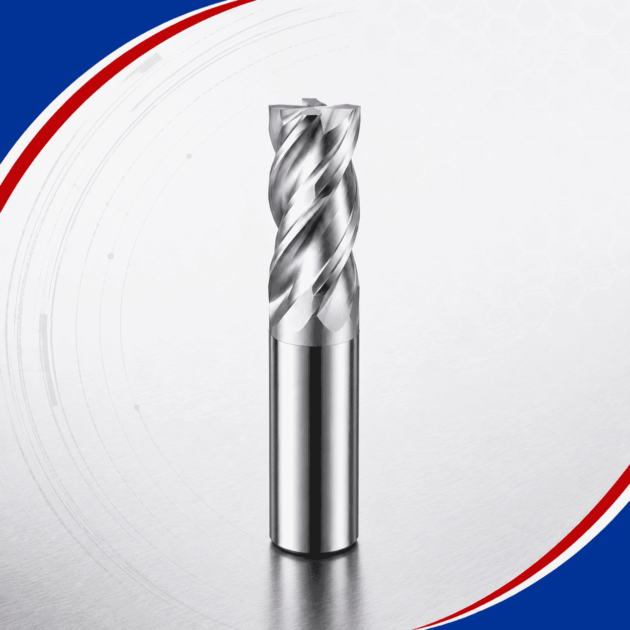
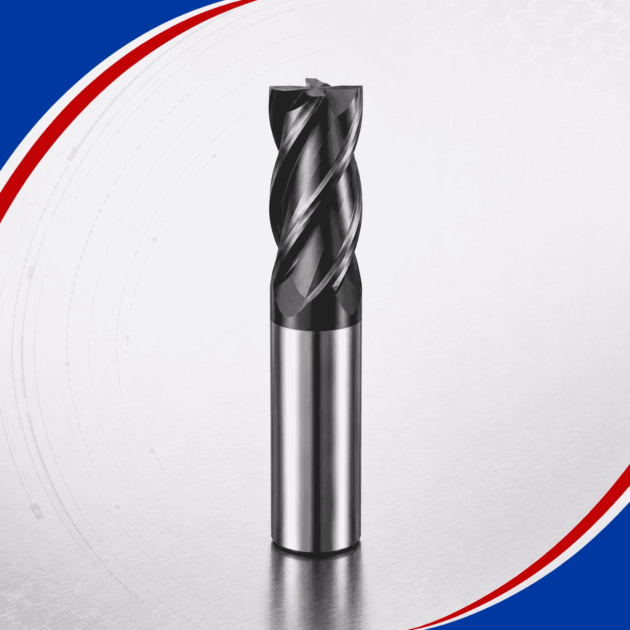
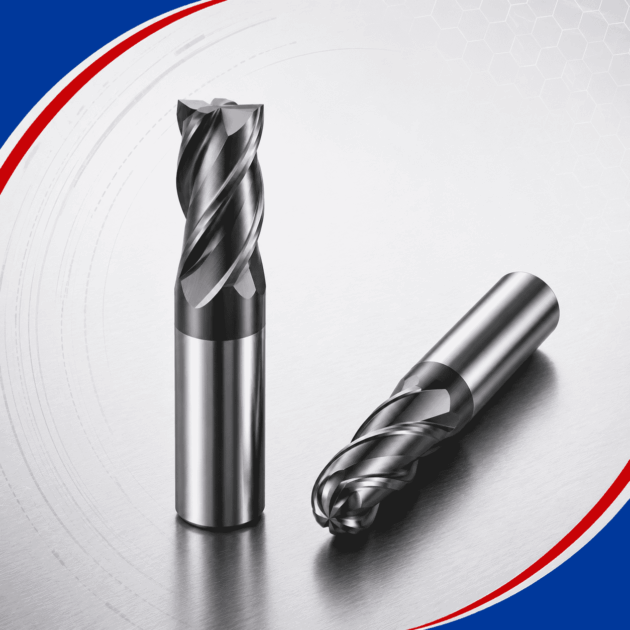
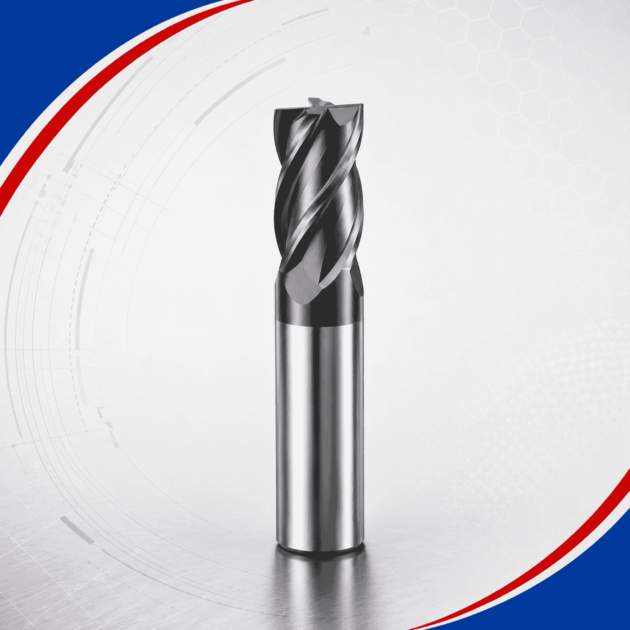
Flat and ball nose are the two end mill geometries that between them cover almost all solid carbide milling. The choice is not about preference, it is about what shape you need at the bottom of the cut. Dhankuber Traders stocks both across the YG-1 K2, TiPhoon, X5070 and ALU-POWER series, so you can match the geometry to the job and the series to the material.
Flat End Mills
A flat, or square, end mill cuts a genuine square corner where the wall meets the floor. Use it for shoulders, slots, pockets, facing and squaring stock – anywhere the corner has to be sharp and the floor has to be flat.
- True square corner – no radius left to clean up later, which matters when a mating part has to seat in the pocket.
- Corner radius variants – a small radius ground on the corner dramatically strengthens the weakest point of the cutter while keeping most of the flat-bottom capability. If your drawing tolerates a small corner radius, take it. Corner chipping is the most common failure mode on square end mills.
- Slotting – a flat end mill in a full-width slot is the highest load condition in milling. Use trochoidal or peel milling with light radial engagement and deep axial depth instead. It removes metal faster and the cutter lasts many times longer.
Ball Nose End Mills
A ball nose end mill has a hemispherical tip. Use it for 3D contouring, die and mould cavity work, radiused fillets and any curved surface a flat cutter physically cannot produce.
- Zero speed at the tip – the very centre of a ball nose has no cutting speed at all, so it rubs rather than cuts. Where the machine allows it, tilt the tool or the workpiece a few degrees so the contact point moves off the dead centre. Surface finish and tool life both improve immediately.
- Effective diameter – at a shallow axial depth of cut the effective cutting diameter is much smaller than the nominal diameter. If you calculate RPM from the nominal diameter you will be running far too slowly. Calculate from the effective diameter at your actual depth.
- Stepover drives finish – the cusp height left between passes is what you see on the finished surface. Halving the stepover roughly quarters the cusp height. This is a far more effective finish lever than reducing the feed rate.
Showing all 4 resultsSorted by latest